The Best Haircare Advice Usually Sounds Surprisingly Simple
There is no shortage of hair advice.
Open any social media platform and you’ll find countless experts recommending miracle ingredients, overnight treatments, complicated routines or the latest styling technique that promises to transform your hair forever. Every week seems to introduce another product that claims to solve problems previous products somehow overlooked.
It has become increasingly difficult to separate useful advice from clever marketing.
Ironically, many experienced hairdressers would probably offer recommendations that sound considerably less exciting.
Drink enough water.
Trim your hair regularly.
Use products suited to your hair rather than somebody else’s.
Protect your hair from unnecessary heat.
Be patient.
These suggestions rarely attract millions of views online because they feel almost too simple.
Yet they continue appearing in professional salons for one reason.
They work.
Professional haircare has always been less about discovering secrets than understanding consistency.
Healthy-looking hair rarely develops through dramatic interventions. More often, it improves because dozens of small decisions gradually begin working together.
One of the biggest misconceptions is that hair problems usually have one obvious cause.
Someone notices dryness and immediately looks for a moisturising treatment.
Another person experiences breakage and searches for strengthening products.
Someone else struggles with frizz and assumes humidity is entirely responsible.
Reality tends to be more complicated.
Hair reflects everything that happens to it.
The way it is washed.
How often it is brushed.
How frequently heat tools are used.
Whether it has been coloured.
The products applied between washes.
Even changes in weather can influence its behaviour.
This explains why experienced stylists often avoid giving instant answers before understanding the full picture.
A product rarely works in isolation.
It becomes part of a much larger routine.
One of the simplest pieces of advice professionals regularly give is surprisingly easy to ignore.
Understand your own hair before trying to change it.
Many people purchase products because they work well for somebody else.
Unfortunately, hair does not behave universally.
Fine hair responds differently from thick hair.
Straight hair behaves differently from curls.
Coloured hair requires different support than untreated hair.
Even two people with apparently similar hairstyles may need completely different routines because their daily habits are different.
This is why consultation remains one of the most valuable parts of professional hairdressing.
Hair is personal.
Advice should be personal too.
Another area where simplicity often proves more effective is washing.
For years there has been endless debate about how frequently hair should be shampooed.
Some insist daily washing is harmful.
Others recommend washing as little as possible.
The truth is usually far less dramatic.
Healthy hair routines are rarely determined by calendars.
They are determined by individual needs.
Someone exercising every day may naturally require more frequent washing than someone working from home.
Fine hair often becomes oily sooner than thicker textures.
Some scalps produce more natural oil than others.
Trying to force every person into exactly the same schedule ignores how different hair really is.
Professionals usually encourage observation rather than strict rules.
Pay attention to how your own hair responds.
That advice may not sound revolutionary, but it is remarkably effective.
Perhaps the greatest misunderstanding surrounding healthy hair is the relationship between styling and condition.
People often believe styling products exist simply to improve appearance.
Modern professional products increasingly serve a broader purpose.
Many formulations now combine styling performance with ingredients designed to reduce environmental stress, improve moisture retention or protect against heat exposure.
The objective is no longer simply to make hair look better for a few hours.
Instead, styling becomes another opportunity to support the long-term condition of the hair.
This reflects a wider change within professional haircare.
Healthy hair has gradually become more important than fashionable hair.
Beautiful styles are easier to achieve when the hair itself is in good condition.
That shift has also changed the way salons recommend products.
Rather than encouraging clients to purchase large collections of unrelated items, many professionals now focus on building balanced routines.
A suitable cleanser.
An appropriate conditioner.
One or two styling products.
Perhaps a treatment when necessary.
The routine remains manageable because consistency usually delivers better results than complexity.
There is another simple idea that often surprises people.
Hair changes.
Not occasionally.
Constantly.
The routine that worked perfectly five years ago may no longer suit your hair today.
Age influences texture.
Colour treatments influence moisture.
Seasonal weather changes affect styling.
Stress can influence scalp health.
Hormonal changes can alter both density and condition.
Professional advice therefore evolves alongside the hair itself.
There is no such thing as a permanent routine.
Only routines that remain appropriate for the present.
This is one reason regular appointments continue providing value beyond cutting or colouring.
Professional stylists notice gradual changes clients often miss themselves.
A slight increase in dryness.
Reduced elasticity.
Changes around the hairline.
These observations allow routines to evolve before small concerns become larger problems.
Patience remains another remarkably underrated aspect of healthy hair.
Modern culture has become accustomed to immediate results.
Hair rarely follows that timetable.
Someone beginning a healthier routine today may notice smoother styling within weeks.
More meaningful improvements usually require considerably longer.
Healthy hair grows slowly.
Condition improves gradually.
Damage also develops gradually.
The best professionals understand this rhythm.
Rather than promising overnight transformation, they encourage realistic expectations and sustainable habits.
Clients often discover that the most satisfying improvements are the ones that happen almost unnoticed.
Hair becomes easier to style.
It feels softer.
Breakage reduces.
Appointments become more predictable.
These are quiet improvements rather than dramatic ones.
Interestingly, many independent salons now extend this philosophy beyond appointments themselves.
Professional experience increasingly influences the products developed, recommended and refined within the salon environment.
Instead of separating salon services from home care, many professionals view both as parts of the same long-term relationship with the client.
That integrated approach allows recommendations to feel practical rather than promotional.
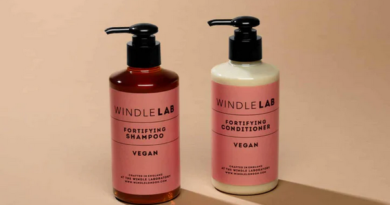
For anyone interested in understanding how this type of professional philosophy is applied beyond the salon chair, it’s worth taking time to explore the Windle London website, where salon expertise and the Windle Lab haircare collection have been developed to complement one another rather than exist as separate experiences.
Perhaps the greatest lesson professional haircare continues teaching is that simplicity should never be confused with lack of expertise.
The best advice often appears straightforward precisely because years of experience have removed unnecessary complication.
Healthy hair does not require endless experimentation.
It requires understanding.
Consistency.
Patience.
Thoughtful routines.
Professionals have known this for decades.
The difference today is that more clients are beginning to recognise it too.
In an industry that constantly celebrates the next innovation, there is something quietly reassuring about advice that remains valuable year after year.
Wash appropriately.
Protect the hair.
Choose products carefully.
Listen to professional guidance.
Allow time for improvement.
None of these ideas are particularly fashionable.
None promise instant transformation.
Yet together they continue producing something far more meaningful than short-term trends. They create hair that not only looks healthy for a day, but continues looking healthy for months and years to come.