The Complete Guide to Restoring a Healthy Indoor Environment
Most of us spend somewhere around 90% of our lives indoors. That number always surprises people when they first hear it, but think about it honestly — your bedroom, your office, your car, the coffee shop, the gym. We move between enclosed spaces almost constantly. And yet, when people talk about air quality and environmental health, the conversation almost always drifts outside. Smog alerts. Wildfire smoke. Diesel exhaust.this requires a immidiate air quality testing by the mold Professionals.
The air inside your home, though? That rarely comes up. And in many cases, it’s significantly worse.
This guide is for anyone who has ever walked into their own home and noticed something felt off — a stuffy smell, a persistent cough that shows up every winter, a child with recurring allergies, or just a vague, hard-to-name sense that the space doesn’t feel right. Restoring a healthy indoor environment isn’t complicated, but it does require understanding what you’re actually dealing with.
Start With What You Can’t See
The most common indoor air quality problems are invisible. Dust mites, mold spores, volatile organic compounds (VOCs), carbon monoxide, radon — none of these announce themselves. You don’t see them settling on surfaces or floating past a window. What you do see are the downstream effects: headaches that go away on weekends, a chronic runny nose that your doctor can’t explain, or a general fatigue that sleep doesn’t seem to fix.
Before you spend money on air purifiers or paint everything with “low-VOC” products, it’s worth doing a basic audit of what’s happening in your space.
Walk through each room and ask yourself a few questions. Does anything smell musty, even faintly? That’s almost always mold or mildew, and it’s worth taking seriously even when it’s barely detectable. Are there rooms that feel more humid than others — bathrooms where condensation lingers, a basement that always feels damp? Humidity above about 60% creates the conditions mold needs to grow, and below around 30%, the air dries out your respiratory passages and makes you more vulnerable to airborne pathogens.
Look at your windows too. Condensation on the inside of windows during cold months is a sign that indoor humidity is too high, and it often points to inadequate ventilation — one of the most overlooked issues in modern homes, which are built tight for energy efficiency but often pay for it in air quality.
Ventilation: The Most Underrated Fix
Here’s something a lot of people don’t realize: sealing up a home for energy efficiency doesn’t just keep the cold out. It also keeps pollutants in. Cooking fumes, cleaning product residues, off-gassing from furniture and flooring, moisture from showers and breathing — all of it accumulates in a sealed space.
The most powerful thing you can often do for indoor air quality costs almost nothing: open windows regularly, even in winter, even if just for ten minutes. Cross-ventilation — opening windows on opposite sides of your home — moves stale air out much more effectively than opening a single window.
For kitchens, the exhaust fan above your stove matters more than most people give it credit for. Gas ranges in particular produce nitrogen dioxide and carbon monoxide during combustion, and cooking at high heat generates ultrafine particles regardless of fuel source. Run that fan every time you cook, and make sure it’s actually venting to the outside rather than just recirculating through a filter (many cheaper range hoods do the latter).
Bathrooms need exhaust too, and the fan needs to run long enough to actually pull moisture out — most people flip it on while they’re showering and turn it off the moment they leave. A good rule of thumb is to leave it running for at least 20 minutes after a shower.
If your home is tightly sealed and you want a more systematic approach, a heat recovery ventilator (HRV) or energy recovery ventilator (ERV) can bring fresh air in while recovering most of the heat from the outgoing stale air. They’re a meaningful investment, but for people in very tight homes or in climates where windows stay closed for months at a time, they can make a real difference.
Tackling Moisture and Mold
Mold is one of those topics that tends to get people either too panicked or not concerned enough. It’s worth calibrating.
Small patches of mildew around bathroom grout or window sills are common and manageable — clean them with a diluted bleach solution or a commercial mold remover, fix the underlying moisture issue (usually inadequate ventilation), and the problem generally stays in check. What you don’t want to do is ignore it, because surface mildew can be a sign of more significant mold growth behind walls or under flooring.
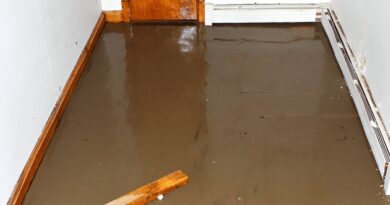
The red flags that suggest a more serious problem include a persistent musty odor throughout a room or your whole home, visible discoloration spreading across walls or ceilings, and any history of water intrusion — a leaky roof, a flooded basement, pipes that have burst or sweated behind walls. If you suspect significant mold growth, especially in HVAC systems or inside walls, professional testing and remediation is the right call. Disturbing large mold colonies without containment can actually make things worse by dispersing spores throughout the house.
For prevention, the goal is keeping relative humidity between 40–60%. A simple hygrometer — they cost less than $20 — tells you where you stand. If your home is consistently too humid, a dehumidifier in problem areas (basements and crawl spaces are the usual suspects) makes a big difference. If it’s too dry, a whole-house humidifier attached to your HVAC system is more effective than portable units, though portable humidifiers work well for individual rooms as long as you clean them religiously (dirty humidifiers become mold and bacteria dispersers in their own right).
Air Purifiers: When They Help and When They Don’t
Air purifiers have gotten a lot of attention in recent years, partly because of wildfires and the pandemic. They do work, but they work for specific things, and understanding that helps you avoid spending money on the wrong product or expecting more than a device can deliver.
A true HEPA filter captures particles — pollen, dust, pet dander, mold spores, smoke particles, and some bacteria. If your issue is particulate matter, a properly sized HEPA air purifier in the rooms where you spend the most time will genuinely help. The key word is “sized” — a purifier rated for 200 square feet won’t do much in a 600 square foot open-plan living area.
What HEPA filters don’t address are gases and VOCs. For those, you need an activated carbon filter, which adsorbs chemical compounds. Many air purifiers include both, which is useful if you’re dealing with off-gassing from new furniture, paint, or flooring, or if you have gas appliances.
What air purifiers can’t do, and this is important, is compensate for inadequate ventilation. They filter what’s already in the air, but they don’t bring fresh air in. They’re a complement to good ventilation, not a substitute for it.
One common piece of advice that’s worth passing along: when comparing purifiers, look at the CADR (Clean Air Delivery Rate) for the pollutants you care about, rather than just the filter specifications. CADR gives you a practical sense of how much air the machine actually cleans per minute.
The Chemicals Hiding in Plain Sight
VOCs — volatile organic compounds — are emitted as gases from a wide range of products, and they’re one of the more insidious indoor air quality problems because they’re everywhere and most people don’t think about them at all.
New furniture, particularly particleboard and plywood products, off-gasses formaldehyde for months or years after purchase. Carpeting off-gasses during and after installation. Paints, varnishes, and adhesives contain solvents that evaporate into the air. Cleaning products, air fresheners, scented candles — many of these release chemical compounds when used or burned.
The solution isn’t to live in a bare concrete box. It’s about making lower-exposure choices where you can and ventilating aggressively when you can’t.
When buying furniture, look for solid wood or products with low-emission certifications (CARB Phase 2 in the US, for example). When painting, use low-VOC or zero-VOC paints and ventilate the space thoroughly during and after — off-gassing from freshly painted walls is highest in the first few days. New carpeting should ideally be aired out before installation (ask the retailer to unroll it in a warehouse for a few days), and you should ventilate heavily for the first week after it’s installed.
For cleaning products, simpler is generally better. Unscented products have fewer chemical additives than scented ones. Vinegar, baking soda, and diluted castile soap handle the vast majority of household cleaning tasks without introducing complex chemical mixtures into your air. If you’re using stronger products — oven cleaners, mold removers, degreasers — open windows and wear gloves.
And air fresheners, including plug-in varieties and many candles, are worth reconsidering altogether. They don’t clean the air; they add more compounds to it. If your home has an odor problem, the solution is finding the source and addressing it, not masking it.
The Things People Forget: Radon and Carbon Monoxide
Two indoor air threats are worth discussing specifically because they’re both dangerous and frequently neglected.
Radon is a naturally occurring radioactive gas that seeps up from the ground and can accumulate in homes, particularly basements. It’s odorless, colorless, and the second leading cause of lung cancer in many countries after smoking. Testing is cheap — a simple passive test kit costs less than $20 and takes a couple of months. If your levels come back high (above 4 pCi/L in the US), mitigation involves installing a sub-slab depressurization system, which typically costs a few hundred to a couple thousand dollars and is highly effective. If you’ve never tested your home, this is genuinely worth doing.
Carbon monoxide is more immediately dangerous — at high levels, it can kill quickly, and at low levels, it causes symptoms that are easily confused with the flu: headaches, nausea, dizziness, fatigue. Sources include gas appliances, wood-burning fireplaces, attached garages, and generators. Carbon monoxide detectors are inexpensive, required by law in many jurisdictions, and non-negotiable if you have any combustion appliances in your home. Replace them every five to seven years, because the sensors do degrade over time.
Practical First Steps
If all of this feels overwhelming, it doesn’t need to be. A reasonable approach is to tackle things in order of potential impact.
Start with ventilation — it costs nothing and often makes a noticeable difference quickly. Then address any moisture or mold issues, since these have the most significant health consequences if left unaddressed. Test for radon if you haven’t, install a carbon monoxide detector if you don’t have one, and consider replacing heavily scented cleaning products with simpler alternatives. If you have children, pets, or anyone with respiratory sensitivities, a good HEPA air purifier in the main living space and bedrooms is a worthwhile investment.
Major renovation decisions — new flooring, new furniture, repainting — are opportunities to choose lower-emission products. They don’t always cost more. They just require a bit more attention when shopping.
For More information about Restoring a Healthy Indoor Environment, Contacts us:
Business name: Green Guard Mold Specialist Elizabeth
Address: 919 S Elmora Ave, Elizabeth, NJ 07202
Phone: 888-861-7846
Website: https://greenguardmoldelizabeth.com/