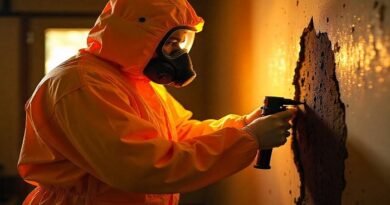
How Water Damage Can Lead to Serious Indoor Air Quality Issues
Water damage is one of the most deceptively dangerous threats a home or building can face. Whether it stems from a burst pipe, a flooding event, a leaking roof, or even persistent condensation, the consequences extend far beyond the visible stains on walls and warped floorboards. One of the most serious — and often overlooked — consequences of water damage is its profound impact on indoor air quality (IAQ). Poor indoor air quality can trigger respiratory conditions, allergic reactions, and long-term health complications, especially for children, the elderly, and those with pre-existing conditions which requires immediate action for mold remediation.
This article explores how water damage sets off a chain of events that can silently compromise the air you breathe inside your own home.
1. The Mold Connection: The Biggest Threat to Air Quality
The most direct link between water damage and poor indoor air quality is mold growth. Mold is a type of fungus that thrives in damp, humid environments — precisely the conditions created by water damage.
How Mold Develops
Mold spores are naturally present in the air both indoors and outdoors. Under normal conditions, they exist in low concentrations and cause no harm. However, when water damage introduces moisture into building materials like drywall, wood, insulation, and carpet, it creates the ideal breeding ground. Within 24 to 48 hours of water exposure, mold colonies can begin to establish themselves.
How Mold Affects Air Quality
Once established, mold releases millions of microscopic spores into the air. These spores, along with mycotoxins (toxic compounds produced by certain mold species), become airborne and are easily inhaled.
Common health effects include:
- Chronic coughing and sneezing
- Irritation of the eyes, nose, and throat
- Skin rashes and allergic reactions
- Worsening of asthma and other respiratory conditions
- In severe cases (particularly with black mold, Stachybotrys chartarum), neurological symptoms and serious pulmonary issues
Even after visible mold is removed, spores can linger in the air and HVAC systems, continuing to affect air quality.
2. Volatile Organic Compounds (VOCs) Released by Wet Materials
Water damage doesn’t just trigger biological growth — it also causes chemical changes in building materials that worsen air quality.
What Are VOCs?
Volatile Organic Compounds are gases emitted by a wide range of materials and products. Building materials such as adhesives, paints, particleboard, carpets, and insulation already off-gas low levels of VOCs under normal conditions. However, when these materials are soaked with water, the rate of off-gassing can increase dramatically.
Sources of VOCs After Water Damage
- Wet carpeting and padding: Releases compounds like formaldehyde and benzene
- Swelling particleboard and MDF: Accelerates off-gassing of urea-formaldehyde resins
- Waterlogged adhesives and sealants: Break down and release toxic solvents
- Contaminated floodwater: Can introduce chemical pollutants, pesticides, and industrial residues into building materials
Prolonged exposure to elevated VOC levels can cause headaches, dizziness, nausea, liver damage, and in extreme cases, cancer.
3. Bacteria and Biological Contaminants
Water damage — particularly from sewage backups, floodwater, or prolonged leaks — introduces dangerous biological contaminants into the indoor environment.
Categories of Water Damage
Restoration professionals classify water damage into three categories:
| Category | Source | Risk Level |
|---|---|---|
| Category 1 (Clean Water) | Broken supply pipes, rain | Low |
| Category 2 (Grey Water) | Washing machines, dishwashers | Moderate |
| Category 3 (Black Water) | Sewage, floodwater | High |
Category 3 water damage is especially hazardous because it carries bacteria such as E. coli, Salmonella, and Legionella, as well as viruses and parasites. When this contaminated water soaks into walls and floors and begins to dry, particles from the dried material become aerosolized — meaning they float into the air and can be inhaled.
Legionella bacteria, in particular, is known to colonize in water-damaged HVAC systems and can cause Legionnaires’ disease, a severe form of pneumonia.
4. Dust Mites: A Secondary Consequence
While often associated with bedding and soft furnishings, dust mites are significantly affected by water damage. These microscopic organisms thrive in high-humidity environments — conditions that water damage reliably creates.
The Dust Mite–Air Quality Connection
Dust mite populations explode in persistently damp homes. Their waste particles and shed body parts are potent allergens that become airborne and trigger:
- Allergic rhinitis (hay fever-like symptoms)
- Asthma attacks
- Eczema flare-ups
- Chronic sneezing and itchy eyes
Even after water damage is repaired, if humidity levels are not brought under control, dust mite populations can remain elevated for months or years.
5. HVAC Systems: Spreading the Problem Everywhere
One of the most dangerous aspects of water damage is what happens when it affects heating, ventilation, and air conditioning (HVAC) systems.
How HVAC Systems Spread Contaminants
If water damage occurs near or within an HVAC system — or if mold, bacteria, and VOCs enter through return air vents — the entire system can become a distribution network for contaminated air. Every time the system runs, it circulates these pollutants throughout the entire building.
Specific risks include:
- Mold growth inside ducts: Ductwork is dark, rarely cleaned, and can retain moisture — ideal conditions for mold
- Contaminated filters: Wet or moldy air filters cannot effectively remove airborne particles and may themselves become mold sources
- Stagnant water in drain pans: AC unit drain pans that hold water can harbor Legionella and mold
6. Musty Odors: A Warning Sign, Not Just a Nuisance
Many people notice a persistent musty or “damp” smell after water damage. While often dismissed as a cosmetic issue, this odor is a direct indicator of active biological contamination — specifically microbial volatile organic compounds (MVOCs) produced by mold and bacteria.
MVOCs are the gases released as byproducts of microbial metabolism. They include compounds like geosmin, 1-octen-3-ol, and various aldehydes. While not all are acutely toxic, chronic exposure to MVOCs has been linked to:
- Fatigue and headaches
- Cognitive difficulties
- Respiratory irritation
- Worsening of pre-existing respiratory conditions
If a musty smell persists after an apparent clean-up, it is a strong signal that contamination remains hidden inside walls, under flooring, or in the HVAC system.
7. Structural Deterioration and Particle Release
As water damage progresses and building materials deteriorate, they begin to physically break down. Crumbling drywall, degrading insulation, and peeling paint all release particles into the air.
In older buildings, this is especially hazardous because:
- Lead paint on deteriorating surfaces can release lead dust, which is a serious neurotoxin
- Asbestos-containing materials (found in insulation, floor tiles, and ceiling tiles in buildings constructed before the 1980s) can release asbestos fibers when disturbed by water damage
- Fiberglass insulation particles become airborne as insulation degrades when wet
These particles are not biological threats but are serious chemical and mineral hazards that can cause long-term lung disease.
8. Hidden Damage: The Long-Term Risk
Perhaps the most dangerous aspect of water damage and indoor air quality is that much of the damage is invisible. Mold growing inside wall cavities, contaminated insulation, or a moldy HVAC system can significantly degrade air quality for years without any obvious visual clues.
Occupants may experience chronic symptoms — persistent coughs, frequent headaches, fatigue, or recurring respiratory infections — without ever connecting them to a past water damage event.
This is why professional assessment using air quality testing, moisture meters, and thermal imaging cameras is essential following any significant water intrusion event.
Protecting Your Indoor Air Quality After Water Damage
Addressing water damage quickly and thoroughly is the single most important step in preventing indoor air quality problems. Key steps include:
Act within 24–48 hours. The faster wet materials are dried and damaged materials removed, the lower the risk of mold establishment.
Use professional-grade drying equipment. Industrial dehumidifiers and air movers are far more effective than household fans and dehumidifiers for drying structural materials.
Test, don’t guess. Professional air quality testing can identify mold spore counts, VOC levels, and bacterial contamination that are invisible to the naked eye.
Inspect and clean HVAC systems. After any significant water event, have HVAC systems professionally inspected and, if necessary, cleaned or remediated.
Address the source. No amount of cleanup will be effective if the source of moisture — a leaking roof, poor drainage, plumbing failure — is not fixed first.
Consider professional remediation. For Category 2 or 3 water damage, or any mold growth covering more than 10 square feet, professional remediation is strongly recommended.
Conclusion
Water damage is far more than a structural and aesthetic problem. It is a gateway to a cascade of indoor air quality issues — from mold and bacteria to VOCs, aerosolized contaminants, and deteriorating building materials — that can silently erode the health of everyone living or working in the affected space.
The key to protecting indoor air quality is speed, thoroughness, and professional assessment. When water enters a building, the clock starts immediately. Acting decisively within those first critical hours and days can mean the difference between a manageable repair and a long-term health crisis hidden within the walls of your home.
For more information about Serious Indoor Air Quality Issues contact Us:
Business Name: Green Guard Mold Remediation Of Union
Address: 1620 US-22, Union, NJ 07083, United States
Phone: +1 908-263-1697
Email: info@greenguardmoldremediationunion.com
Website: https://greenguardmoldremediationunion.com/