Curly Hair: The Architecture of Texture and the Art of Understanding It
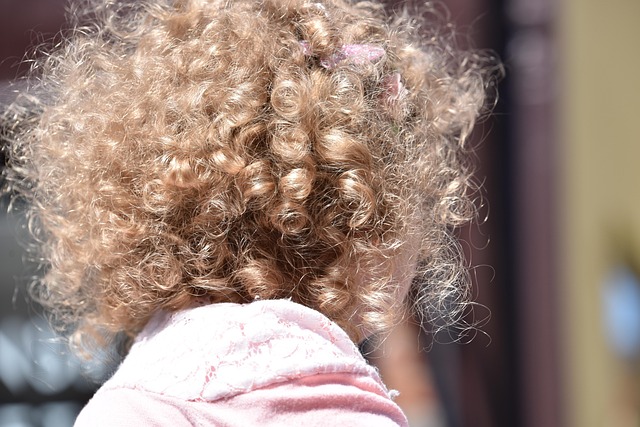
Curly hair is not simply a texture; it is a structure, a presence, and often a statement long before a word is spoken. In the UK, where climate shifts subtly from damp winter mornings to humid summer afternoons, curls possess a personality that feels alive to their environment. They expand, soften, spring and settle in response to the air around them. To live with curls is to understand that hair can have moods, and to care for curls is to recognise that their beauty lies not in control, but in collaboration.
For decades, mainstream beauty narratives prioritised sleekness. Smooth finishes were equated with polish, while texture was frequently misunderstood as unruly. Yet curls have always carried quiet confidence. They reflect light differently, frame the face with movement, and resist uniformity in a way that feels distinctly individual. In London especially, where personal style is an extension of identity, curls have found renewed appreciation as something to celebrate rather than subdue.
Understanding curly hair begins with acknowledging that it behaves according to its own design. It does not fall straight because its follicle is not symmetrical. The very shape of the hair root creates a curved strand, and that curve influences everything from moisture retention to shine. When we approach curls with this knowledge, the conversation shifts from taming to enhancing.
The Science Beneath the Spiral
At a microscopic level, curly hair differs structurally from straight hair. The follicle that produces it is more oval or asymmetrical, causing the strand to bend as it grows. This curvature creates points along the hair shaft where the cuticle slightly lifts, making curls more prone to dryness. Natural oils produced at the scalp struggle to travel evenly down the twists and turns of the strand, leaving the mid-lengths and ends particularly vulnerable to dehydration.
In the UK’s often unpredictable weather, this structural reality becomes even more noticeable. Humidity can swell the hair shaft, disrupting defined curl patterns and leading to frizz. Cold air can reduce moisture, leaving curls feeling brittle. Recognising these environmental influences helps explain why curl care must adapt seasonally rather than remain static throughout the year.
Yet within this complexity lies opportunity. Curly hair has volume and dimension built into its DNA. It reflects light along curves, creating depth that straight hair must often simulate through styling. When hydrated and thoughtfully shaped, curls possess a vibrancy that feels organic and effortless.
Porosity and the Language of Moisture
Porosity plays a defining role in curl behaviour. Some curls absorb moisture quickly but struggle to retain it, while others resist water initially yet hold hydration once achieved. Understanding porosity transforms product selection from guesswork into strategy. Lightweight creams may suit finer curls, while richer formulations provide structure for denser textures.
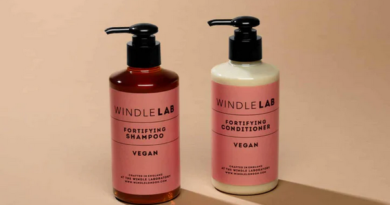
Professional guidance becomes invaluable here. High-quality products formulated with balanced proteins and emollients reinforce the hair’s natural integrity rather than coating it superficially. At salons such as Windle London Hair Salon, the emphasis on scalp and strand health aligns seamlessly with the needs of textured hair. Nourishment is approached with intention, ensuring that definition arises from hydration rather than heaviness.
The Cut as Sculpture
Cutting curly hair requires a philosophy distinct from straight-hair techniques. Because curls shrink as they dry, length cannot be judged solely when wet. Each curl grouping behaves slightly differently, meaning that shape emerges from an understanding of pattern rather than a rigid template.
A skilled stylist approaches curls almost architecturally. They observe how the hair falls naturally, how it responds to movement, and where density gathers. Layers are introduced to encourage lift without disrupting cohesion. The goal is not symmetry in the conventional sense, but harmony within the curl pattern itself.
In London’s diverse neighbourhoods, textured hair spans an extraordinary range, from loose waves to tightly coiled spirals. Respecting that diversity requires expertise rooted in both science and artistry. The right cut liberates curls from weight and imbalance, allowing them to form with ease rather than resistance.
Dry Cutting and Visual Precision
Many curl specialists prefer cutting hair dry, allowing them to see each curl in its natural state. This method offers clarity. It reveals how shrinkage affects length and how curls cluster together. Adjustments are made in response to real-time behaviour rather than prediction.
The result is a shape that feels intuitive. Clients often describe the experience as transformative, not because the curls are altered, but because they are finally understood.
The Ritual of Care
Curly hair thrives on ritual. Cleansing must be gentle enough to preserve natural oils while effectively removing buildup. Conditioning becomes more than an afterthought; it is the cornerstone of definition. Leave-in treatments create a protective veil that shields curls from environmental stressors, particularly in cities like London where pollution can subtly impact hair texture.
Drying methods influence outcome profoundly. Diffusing on a low heat setting can enhance definition without disturbing the curl pattern, while air drying allows for softness and expansion. The key lies in minimising disruption during the drying process. Excessive handling can break apart curl groupings, inviting frizz where definition once existed.
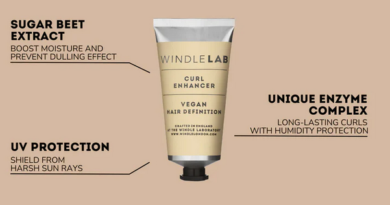
High-quality styling products serve as collaborators rather than controllers. They encourage curls to hold their form while maintaining flexibility. Modern formulations have evolved far beyond stiff gels of the past. Today’s creams and serums provide memory and resilience without sacrificing movement.
Embracing Texture in Professional Spaces
There was a time when individuals with curls felt compelled to straighten their hair for formal settings. That narrative has shifted. Across the UK, textured hair now appears confidently in boardrooms, on creative stages, and within fashion circles. Curls are no longer an exception; they are an expression.
Professional salons have responded to this evolution by refining their approach to textured hair. Consultation now includes discussion of lifestyle, maintenance preferences and long-term goals. Rather than offering a universal solution, stylists tailor strategies that align with each client’s pattern and routine.
It is often in reflective conversation that one realises the value of expertise. After years of navigating trial and error, discovering a true curly hair salon in London can feel less like finding a service and more like finding a partnership. The difference lies in being seen and understood rather than managed.
The Emotional Landscape of Curls
Hair carries memory. For many, curls are intertwined with childhood experiences, cultural heritage and personal identity. Learning to care for them properly can feel like reclaiming something once misunderstood.
In the UK’s multicultural landscape, curls tell countless stories. They speak of lineage, migration, resilience and adaptation. Celebrating them within professional spaces affirms those narratives. A stylist who honours texture without attempting to alter its essence contributes to that affirmation.
Confidence often follows comprehension. When curls are cut correctly, hydrated consistently and styled thoughtfully, they require less correction and inspire more trust. That trust transforms the daily routine from a battle into a ritual of care.
The Future of Curl Care
Advancements in hair science continue to refine how we approach textured hair. Research into bond-building treatments and moisture-retention technologies promises even greater resilience. Yet at its core, curl care remains grounded in fundamentals: hydration, respect for natural pattern, and skilled technique.
Windle London Hair Salon embodies this philosophy by merging innovation with attentiveness. Products are selected not for trend value but for performance and integrity. Stylists engage with texture as an evolving conversation rather than a fixed formula.
Curly hair, with all its complexity, resists simplification. It demands patience and rewards understanding. In a city as dynamic as London, that dynamic quality feels fitting. Curls mirror the rhythm of urban life: layered, expressive, and never entirely predictable.
Ultimately, embracing curly hair is about embracing individuality. Each spiral carries its own geometry, its own response to weather and movement. By aligning care with structure rather than imposing uniformity, we allow curls to reveal their full character. And in doing so, we discover that texture is not something to be corrected, but something to be celebrated in all its deliberate, architectural beauty.
Also Read about night time hair care guide.